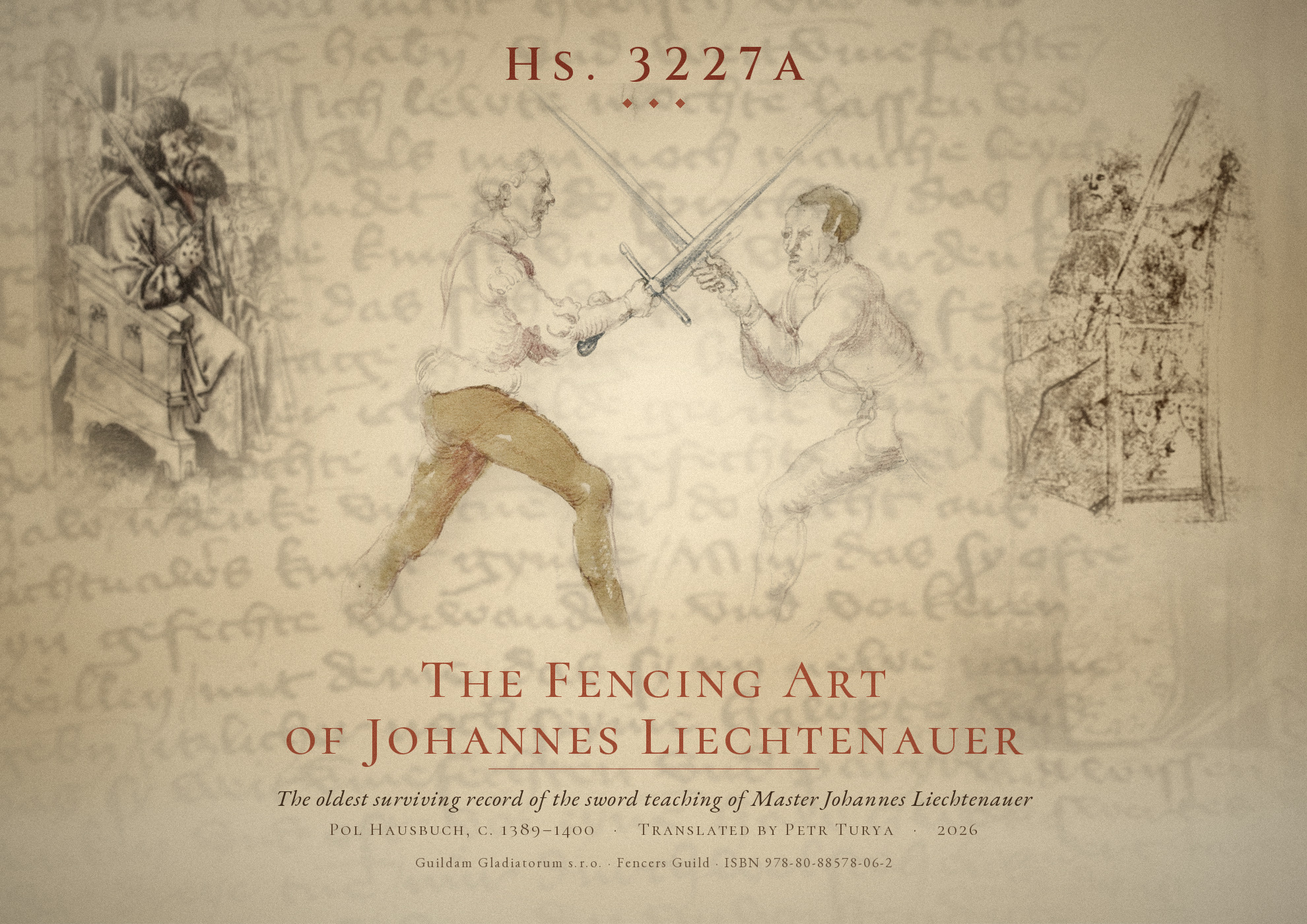
HS.3227a The fencing art of Johanes Liechtenauer EN
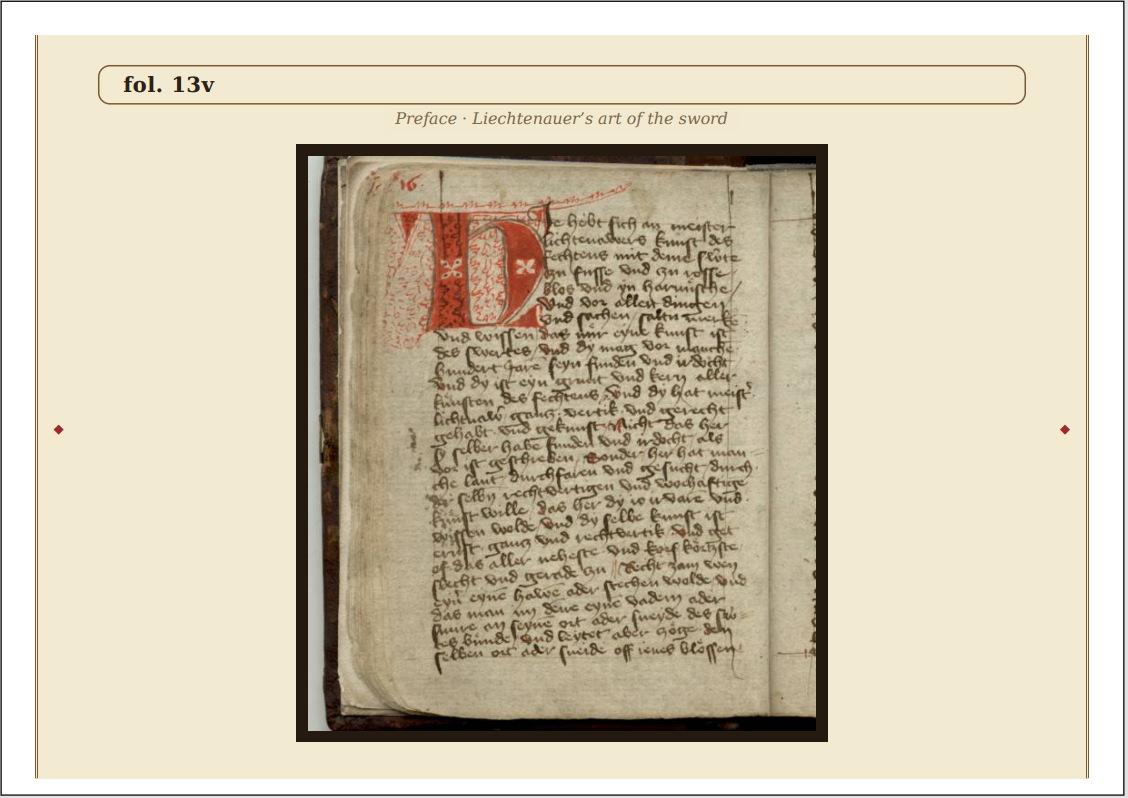
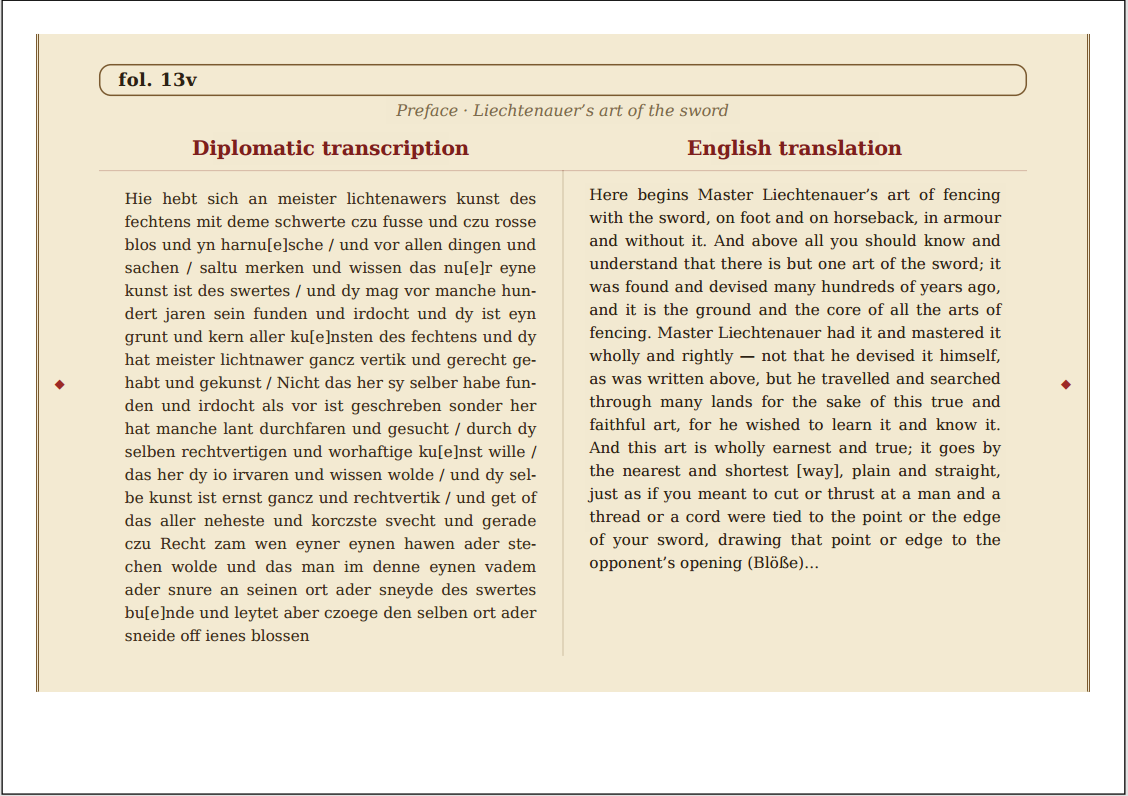
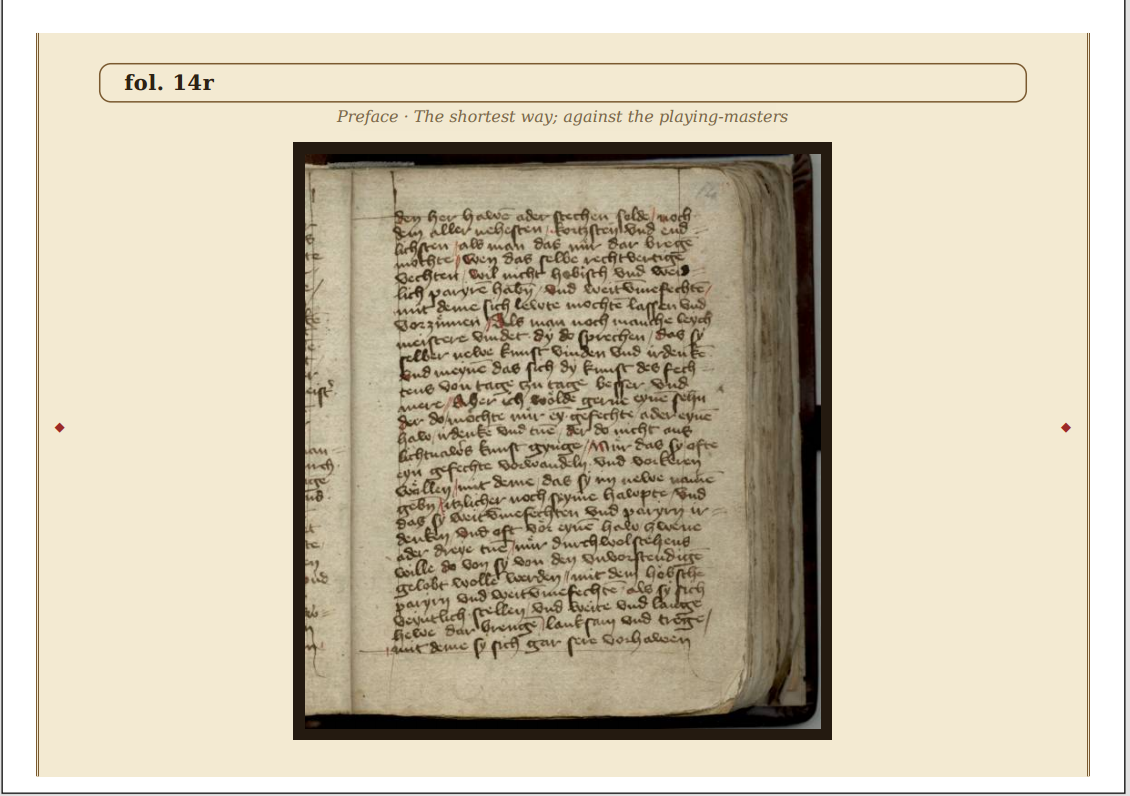
The oldest surviving record of Master Johannes Liechtenauer's teaching — and the only source that adds an explanation of why his verses work. A complete edition of all 85 folios of the Nuremberg manuscript Hs. 3227a: facsimile, diplomatic transcription and English translation side by side, with an apparatus of notes, a glossary and footnotes.
Hs. 3227a, held in the Germanisches Nationalmuseum in Nuremberg, is the earliest known record of Liechtenauer's teaching. It was written around the turn of the fourteenth and fifteenth centuries — at a time when men who might have known the master personally were still alive.
It is not, however, a presentation copy. The fencing material is set into a household compendium among medical recipes, charms and notes on metals: a notebook, not a fair copy made for scribes. That is precisely what makes it so valuable. It catches the teaching at the moment when it was still being handed on in person, with all the digressions, corrections and personal remarks of the man writing it down.
What makes this manuscript exceptional
Other sources of the Liechtenauer tradition give the Zettel and its gloss — what to do. Hs. 3227a alone explains why. It sets out the five words on which the whole teaching rests, a discourse on motion as the ground of fencing, a mechanical argument for gripping the sword between cross-guard and pommel, and the earliest known description of a sword's balance as a principle of construction. Its author is also the only one who argues with his contemporaries — with those who invent new names for old pieces and court the applause of the ignorant.
What the edition contains
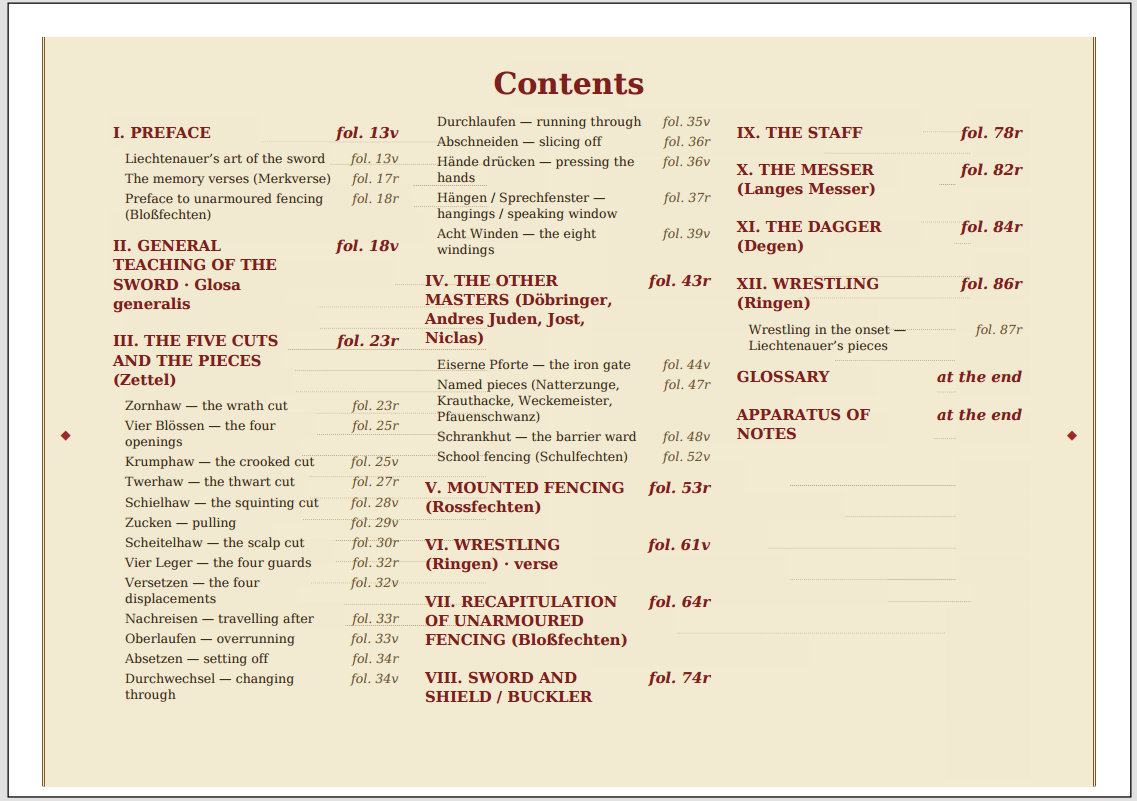
- The complete manuscript, all 85 folios from 13v to 89r — unarmoured fencing, armoured combat, mounted fencing, the messer, the staff, the dagger and wrestling
- Parallel layout: diplomatic transcription and translation side by side, folio by folio, with the facsimile on the facing page
- Apparatus of notes: 34 examinations of disputed and difficult passages — linguistic evidence, period context, the reasoning behind editorial decisions
- Footnotes at the first occurrence of the key terms
- Glossary of technical terminology with the German forms
- Running heads giving the content of every folio
Editorial principles
The translation is made from the manuscript, not through an intermediary. Folio boundaries are kept even where a sentence runs over the leaf — the reader sees the source as it stands, not smoothed out. Uncertain passages are not filled in by conjecture: where a reading has no support, this is admitted in square brackets and explained in the apparatus. German terms take precedence over paraphrase and are given in brackets at their first occurrence.
Who it is for
For practitioners who want to know what lies behind the techniques, not merely what they look like. For instructors who need a source solid enough to teach from. And for researchers, who will value a documented apparatus and openly admitted gaps.